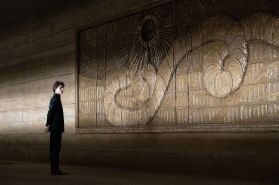
When I saw the trailer for the new Dungeons and Dragons film I completely dismissed it. It looked like a standard Hollywood cash grab with no passion or love behind it. But then I started hearing more about this film. In particular, the fact that John Francis Daley and Jonathan Goldstein were behind it. These two had huge roles in Game Night, Spiderman Homecoming, Horrible Bosses and Vacation – movies that are genuinely funny and extremely rewatchable. And then, the reviews came out. Dungeons and Dragons was doing well both critically and commercially and I instantly knew I had to see it.
Dungeons and Dragons Honour Among Thieves is about a thief and a band of unlikely adventurers embarking on a quest to retrieve a lost relic. The adventure goes awry when they run into the wrong people. The film stars Chris Pine, Hugh Grant, Michelle Rodriguez and is written and directed by John Francis Daley and Jonathan Goldstein.
The two Johns have spoken a lot about how they knew the script needed to be incredible for this film to work. They spent years reworking it to make sure it appealed to the fans and captured that sense of friendship that is pivotal to the game. It completely paid off because it is a brilliant script. The movie balances 5 characters that each seem to get a real and honest development over a standard runtime. Everyone in the group has their own voice that makes them that much more hilarious on screen. On top of this, the plot is refreshing and doesn’t follow the same beats as a standard fantasy film. It even maintains an excellent pace that never feels dragged out.
What really surprised me about Dungeons and Dragons was the emotional beats. I did not expect this film to include such well written and performed scenes that were genuinely heartfelt. Each member of the band has a moment that has some serious dramatic weight and adds more depth and layers to these characters. Without these beats, this film would simply be a solid action comedy.
The casting for this film was truly perfect. Victoria Thomas has chosen each actor perfectly to play these unique characters. Chris Pine is doing what he does best – being extremely charismatic and entertaining on screen. I love that Michelle Rodriguez is doing something new and leaning into a comedic tone. Justice Smith has mastered that awkward comedy and Sophia Lillis has this intensity that makes me want to see her in more films. Finally, Rege Jean Page and Hugh Grant really stole the show for me. They were so incredible in their roles that every time they were on screen it felt like their movie.
A lot of action in Hollywood blockbusters can feel very repetitive. You have occasional films like Everything Everywhere All at Once and John Wick 4 reinventing this, but most action movies are just two people shooting lasers at each other. The two Johns clearly understand this. Each action sequence introduces new elements and devices that feel refreshing. Every character uses their skillsets in engaging ways that isn’t just some karate and punching (cough MCU cough). I just love how different each action set piece feels in this film and to other movies being made.
Should you see Dungeons and Dragons Honour Among Thieves?
I honestly believe that this film may be one of the best blockbusters of the year. It is so entertaining and fun from start to finish. As soon as I finished it, I wanted to go and see it again which is exactly what you want from an action comedy. Definitely go see this film because it’s well worth your time.
When I started interviewing people, I had the singular goal of finding filmmakers who are out there making short films no matter what. Whether it’s shot with their friends or with no budget, I wanted to focus on artists who are extremely passionate about their craft. Felix Lovell embodies this. He has been making quality short films for years, is a very talented photographer and is constantly working on other peoples projects. Now, he is focusing his efforts on a short surreal drama called The Scatterer.
Talking his Upcoming Short Film
What is The Scatterer about?
“The Scatterer follows a professional ash scatterer named Arthur who encounters a mysterious figure in the outback and is tasked with scattering their ashes. Memories start blurring with the present as he seeks answers for unanswerable questions.”
How long has this idea been stuck in your head for?
“I would say September/ August 2022. Looking back on it, I could see a lot of things in my life influencing what I wrote. I wrote it around when my grandpa was dying and also, I wrote the first draft while in hospital with appendicitis. Subconsciously, all these feelings were being put into the script.”
Felix on the set of Kudzu (2022) with
Your process day in and day out writing?
“I have a massive list in my notes app on my phone. Any inspiration, things I have heard people say or things I have seen go into it. My ideas come from looking at that list, finding common themes and collating them into a story.”
“For the writing, I map out a story arc before I start writing on the script. I only write when I am actually feeling inspired since it is a passion project. When I write I also like to act out what I am writing. Whether it be blocking it or talking to myself, it helps me visualise the story a lot more.”
Before shooting starts, what is your biggest concern?
Kudzu (2022)
“The first concern was location because it was far away and set in the desert. It’s almost been solved by a lot of research and a cinematographer (Elliot Deem) who suggested Lightning Ridge. Another thing we are struggling with now is casting. We are casting two demographics I am not super connected with but luckily our casting director (Shanay Warren) is helping a lot. It’s also just a blessing to have Eleanor Somerville as the producer because she just has this ability to get things moving.”
Kudzu, Somnium, Malingee have such a specific style and tone, is there a filmmaker you are inspired by?
“David Lynch is my number one. Also, Yorgos Lanthimos even though my films don’t reflect the tone of his. I love any filmmaker who is bold enough to do something that might not make any sense immediately but it sticks with you. I also love Robert Eggers, Ingmar Bergman and Andrei Tarkovsky.”
Talking movies
4 of your favourite films?
“Eraserhead is my number one all-time favourite film. You love it or you hate it. Also, Stalker, the Lighthouse, and the Killing of a Sacred Deer.”
Talking the Future
Where do you want the Australian film scene to move?
“It’s great having these classic Australian stories like The Dressmaker but having films that are willing to experiment and do something different is important. I was lucky enough to work on Angus Kirby’s new film. He isn’t afraid to do something that doesn’t fit the standard Australian drama structure. Good examples of this are Nitram and Babyteeth.”
What is your one film wish?
“I want Lynch to release one more film. I think he has one more project in him. I really hope he doesn’t die. Actually, maybe that’s my wish, to keep David Lynch alive.”
What film are you most looking forward to in 2023?
“Beau is Afraid I am very excited for. In terms of someone pushing boundaries, Ari Aster is constantly doing just that. It just looks crazy and I’m here for it.”
Make sure to go and watch Felix’s short films on his Youtube Channel and follow The Scatterer on Instagram. If you believe in this project as much as I do make sure to donate to their Go Fund me here
The John Wick series is one of the biggest and best action franchises in Hollywood. I loved the first film and thought the sequels were solid follow ups that built on the world and expanded the lore. The fourth John Wick film is one of the most hyped movies of the year. Critics and audiences are loving it, and this is reflected in the box office. Nevertheless, I went into this film worried it would just repeat the previous Wick movies. So, did this movie use its 2hr 50min run time successfully or was it a recycle of its predecessors?
I think everyone going into John Wick 4 has an expectation when it comes to the action. The one takes, close combat and headshots are all staples of this franchise. Forget all that because John Wick 4 completely reinvents the wheel. The locations, camera angles and stunts are phenomenal and some of the best action of the last 10 years. This film builds up each sequence perfectly and even when you think it’s done, they level it up. I just have so much respect for the stunt coordinators and stunt doubles who keep improving on every film.
Now with every action movie, there comes the scenes in between the set pieces that can sometimes just be fillers. With John Wick 4, it wasn’t awful, but I did find myself getting a little bored. Characters seem to repeat what’s at stake and constantly saying poetic or “badass” lines just to sound cool. When the run time is almost 3 hours, I think a lot of the scenes could just be cut down by a few minutes. Honestly, I would have loved if the first 20mintues were all exposition and character building and then the next 2 hours were straight non-stop action (maybe that’s just me).
The world that Chad Stahelski (Director) and Jonathan Stela (DOP) have created is beautiful. Every shot has this specific style and feel that accentuates the gothic underworld of John Wick. Even though the lighting is over the top and exaggerated it feels natural for these characters. It’s so refreshing to see blockbusters that are doing engaging things with the shooting that isn’t just a grey scale colour grade (MCU).
For the first 30minutes of John Wick 4, I was thrown off by the actors. What I mean by that is that they are all giving such exaggerated performances that it surprised me. Eventually, I settled into them because I realised this was all on purpose. Keanu Reeves, Donnie Yen and Lawrence Fishburn are trying to be over the top because they know that it fits the genre. In addition, Bill Skarsgard and Scott Adkins were amazing in this film. They perfectly embodied these sinister characters and were extremely entertaining to watch on screen.
Shamier Anderson as Tracker in John Wick: Chapter 4. Photo Credit: Murray Close
SPOILERS
The ending of John Wick 4 felt a little unsatisfying. It felt like the whole film was building to something big and surprising, but nothing ever really changed. The duel between Donnie Yen and Keanu Reeves was not entertaining and a disappointing way to wrap up the film. I would have loved if it was an actual fight sequence between Bill Skarsgard and Keanu Reeves. Personally, it would have been a massive twist if he was this incredible fighter who was actually on the same level as Wick.
SHOULD YOU SEE THIS FILM?
Absolutely. John Wick 4 will be remembered as one of the best action movies of all time and is definitely worth seeing on the biggest screen possible. While it drags in parts, the action is truly incredible and the film looks beautiful.
After seeing Scream 5 I was completely sucked back into this franchise. While the film wasn’t anything new, it was still an excellent sequel and a very entertaining movie. For the first time in maybe forever, I was excited for a Scream film. It had a great cast, good directors and most importantly a new premise. But Scream 6 surprised me in multiple ways I didn’t except – some for the best and some for the worst.
What I love about this franchise is simply how entertaining they are and Scream 6 is no exception. From the beginning to the end of this film, I was glued to the screen because there was never really a slump. It was such a fun and enjoyable ride that reminded me why I love these films so much.
A big push for this film was how aggressive and dangerous the new Ghost Face would be (something that really interested me). Now there is one scene early on where they do feel more threatening – the killer is killing randoms, twisting knifes deeper and using new weapons. But the rest of the film, it essentially reverts to the same old ghost face. I would have loved to see this continue, with a ghost face that’s even more unhinged (maybe torturing victims or fucking with them more).
Building on from this, I think the horror in Scream 6 is perhaps some of the worst it’s ever been. There was never any point that felt like it was really trying to be scary. Maybe it was intentional because the directors wanted to move in a more action focused genre, but I never felt tense like in previous Scream movies.
Something I didn’t expect from Scream 6 was to love the core cast as much as I did. In number 5, I found a lot of them annoying and over the top but in this film, they feel a lot more dialled back. Just like Drew Barrymore, Samara Weaving stole the opening of this film and I instantly wanted to see more of her. I also loved Melissa Barrera because she felt more dangerous than the killer and had this refreshing intensity to her. Finally, Mason Gooding really stood out with a natural charisma that makes me want to see him in everything.
I think an underlying issue with this franchise is they feel each one must repeat some core tropes – the group stuck in a room being killed, someone breaking down the rules of horror movies, the killer being revealed at the end blah blah blah, its boring and repetitive. None of this needs to happen for this franchise to be successful and loved. What was engaging to me about this movie was the new direction they allude to but which they didn’t follow through with. So thereby I present to you, the
THE FORTY-FOUR CLOVERS SCREAM FILM
As soon as I finished the film I was very excited to write about how I would have made it (no offense intended). The best scenes from Scream 6 were when the protagonists were out in the streets of New York. Now I understand that the budget wasn’t huge, and they wouldn’t be able to afford it but hear me out…
Imagine this film but completely set in one night on Halloween. You have Melissa Barrera starting off with a huge group of friends as they slowly get taken out. Like Die Hard, she gets more and more injured but because its Halloween no one takes notice. Having the ghost face masks everywhere is an amazing psychological horror element that wasn’t utilised enough in this film.
Melissa Barrera (“Sam Carpenter”) stars in Paramount Pictures and Spyglass Media Group’s “Scream VI.”
Melissa has this physicality to her of a true action star that should be explored. Imagine Escape from New York or the Purge 2 but a Scream Edition. It could have been an excellent action / horror film that completely revamped this franchise. You don’t even need to have one singular killer but instead have a group of Richie loyalists all out for revenge against Melissa (like the Batman).
SPOILERS
I feel bad for the writers because trying to pick a killer who the audience doesn’t immediately suspect is near impossible. Nevertheless, this one felt particularly bad. It’s basically the most obvious guess you could have because they just did Scream 2 again. In my head, I was sure it was Mathew Lillard but that’s probably because I just wanted it to be (I pray they are saving him for the next one). While there were certainly some great twists, I don’t think the ending was as satisfying as previous films.
The Future of Scream
In Scream 5 and 6 they allude to Melissa Barrera being some sort of serial killer. In Scream 7, I know they will probably tap into this a little more, but I think the whole film should be about her having this violent streak. They can’t just do the same thing again or this franchise will fall off. Maybe a film about her taking on the mantle and killing anyone who is associated with the killers would be refreshing. While she is doing this, someone is chasing her down and trying to kill her (Mathew Lillard). I just think there is so much more potential for this franchise that isn’t being explored.
Josh Allan is a Brisbane based writer and director. Recently, he released a short film called 2:32AM which has won multiple awards and screened at countless festivals. It is truly an incredible short-film about human connection and finding your place in the world. As soon as I saw it, I knew I had to grab an interview with Josh. Read on for our conversation about his short film, movies and his future.
On 2:32Am
What is 2:32Am about?
“It’s a short film about two lonely strangers learning to find that deeper connection that they’re both missing. Titus is this sort of rough around the edges, charismatic character that has an internal conflict he needs to address. Whereas Caleb is more of that reclusive Uni student who hasn’t made close friends.”
What was your process writing this short film?
Josh Allan on set of 2:32Am
“I find writing challenging. My process is kind of all over the place. It starts with messy feelings or ideas that I will start to write into a script. I have also learnt to integrate feedback a lot. My main process is trusting my intuition while also reaching out for help.”
What were the biggest challenges of creating an indie film and how you overcame them?
“I found that on set we had a limited time to shoot. It was difficult trying to work to a schedule while trying to preserve the quality. What I am always learning is to trust yourself, the material and the people around you. Trust amid the stress is key.”
How do you run your set?
“To me a lot of problems that you need to solve during production start in pre-production. I like to have in depth discussions before I get on set. Most of the tension on set comes from a lack of creative alignment. If someone is stressed or angry I just try and see it from their perspective.”
How you battle lack of motivation?
“The thing that helps me is if I am stuck on one project, I jump onto another temporarily. I am a filmmaker and I also do music, so I swap between them.”
Cast and Crew of 2:32AM
Talking Film
What filmmakers inspire you
“Richard Linklater. I find the way he wrote stuff – from a very personal / semi-autobiographical place – very interesting. Rather than having an overt plot, conversation becomes the plot. In interviews for the Before Trilogy, he was saying the connection is cinematic enough.”
“Steven Spielberg and George Lucas. While they don’t influence my style, they inspired me to make films.”
Can you list four of your favourite movies?
Josh on set
“Manchester by the Sea I really like because my Dad and I connect through it. Short Term 12 I could watch that movie forever. One that has stuck with me and ignited something within was Whiplash. It showed me that a story based in the real world can be more anxiety inducing than a horror. Also, Kramer vs Kramer I clicked with it because my parents got divorced when I was that age.”
The Future
What’s next for you?
“I am one of the producers of an up-and-coming indie film studio. We have been making some micro short films and we have a drama/ thrill coming out called Sparring. It’s like a Whiplash style psychological thriller about a military guy being interrogated by a dictatorial figure.”
2:32AM
Where do you want Australian movies to move?
“Truthfully, I am not that wired into the Australian film industry and the trends. For me, I don’t feel much pressure to try and represent the whole country. It’s fine for filmmakers to make something that doesn’t have to be distinctively Australian. Also, I think filmmakers worry too much about what the market wants and appealing to a demographic.”
For some dumb reason, Australia gets all the best movies of the year 3 months later then we are supposed to. Around February/ March we get a dump of all the award-winning films, and it is a rush to see them before they are out of cinema. Therefore, I saw Aftersun probably four months after I should have. Nevertheless, I will continue to review this film that you have seen ages ago and don’t want to hear about anymore.
Aftersun is about Sophie, played by Frankie Corio, as she reflects on a holiday she had with her father Calum, played by Paul Mescal. At 11 years old, Sophie struggles with growing up while Calum struggles with the world outside of fatherhood.
Aftersun is undoubtedly one of the best screenplays of the year (the fact that it is not nominated for an Oscar is mind boggling). Charlotte Wells writes with so much restraint and simplicity it feels like this is her 10th film. This golden thread of memory and grief is something that has been ticking away in my head for the last 3 days. What’s so incredible is that Charlotte almost never explicitly says anything. The tiniest nods and clues create this harrowing tone that will allude to certain themes but let the audience decide for themselves.
While the writing is incredible, Charlotte Wells’ direction is equally skilled. Aftersun is one of those films that feels like you shouldn’t be watching it. It is so intimate and honest that I truly felt intrusive being in this space. Charlotte and Gregory Oke (DOP) work together to place the audience right next to our characters. The camera has any eye of its own. It wanders around the room, sometimes just watching Sophie and Calum as they sleep.
Paul Mescal’s performance is exceptional. He drip feeds the audience little lines and actions that eventually let them understand who this man is. Paul’s subtleties in portraying such a broken man never seem over the top or out of line with this character. He never has the big acting Oscar scene and yet undeniably delivers my favourite performance of the year.
I cannot talk about Paul without mentioning Frankie Corio. She was 11 years old at the time they shot this and delivers a beautiful performance and one of my favourites of the year. Like Paul, she never hams it up but instead focuses on embodying a girl who is lost in her youth but trying to hide it.
For me, I know a film is truly excellent when an ending stays with me. Once I finished Aftersun, I went home and watched the ending three times. Charlotte Wells skilfully shows the audience so much while telling them so little. Through the brilliant use of a song and incredible direction, the movie all comes together without explicitly saying a word. It is a haunting and harrowing conclusion that will stay with you for a long time.
Should you see Aftersun?
Absolutely. It is one of my favourite films of the year and is well worth your time. While it has a slower pace, it is deliberate in letting you understand this relationship and these characters’ lives.
For as long as I can remember, Science Fiction has been one of my favourite genres as a filmmaker and storyteller. Consistent rewatches of films like Star Wars, Alien and Blade Runner have never failed to transport me to galactic worlds and alien stars I couldn’t imagine on my own.
So I’ll admit, before the announcement that Denis Villeneuve would direct a film adaptation of Frank Herbert’s 1965 Sci-Fi Epic, Dune, I had no prior knowledge of the source material or legacy that the Dune saga had paved through pop culture during its history.
However, after viewing Villeneuve’s film adaptation of Frank Herbert’s classic, I found myself tumbling down the Dune rabbit hole.
Upon researching and studying every book, short story, and journal penned by the late author, it became clear to me that the lasting legacy of the Dune saga has greatly influenced the modern genre of Science Fiction as we know it today, both through page and screen. Leaving behind an eternal legacy that transcends culture, language, and influence.
Gurney Halleck (Josh Brolin), Paul Atreides (Timothée Chalamet) and Sir Duke Leto Atreides (Oscar Isaac)
In this retrospective and analytical article, I wish to unpack what truly makes Dune so influential for both storytellers and audiences alike. By reviewing and scrutinising the written work of Frank Herbert’s Dune Saga, as well as the film adaptation directed by Denis Villeneuve (2021, 2023), only then can the full franchise’s impact be fully realized.
By the end of this paper, my goal is to truly showcase just how important and influential the Dune franchise has had on both filmmakers and storytellers alike.
Hopefully, this article will inspire others to delve deep into the Dune mythology itself and learn more about this universe before Villeneuve’s Dune Part 2 is released later this year.
Editor’s Note: I am only taking Dune books penned by Frank Herbert into consideration when discussing the cultural impact of the Dune Series. Any Dune books penned after Frank’s death, (1986), will not be taken into consideration.
Frank Herbert’s Dune Saga:
Dune’s First Publication Cover (1965).
“I must not fear. Fear is the mind-killer. Fear is the little-death that brings total obliteration.”
Paul Atreides
Before Dune’s first publication in 1965, Science Fiction literature was often depicted in short, self-contained, single-print narratives. Novels akin to George Orwell’s 1984 (1948), and Mary Shelley’s Frankenstein (1818) were seen as the pinnacle of Science Fiction literature. However, there had been little to no attempt in novel writing to create a wide-spreading Sci-Fi universe with its own living ecosystem, society and, politics which evolves and adapts with its characters over time and with each subsequent novel.
However, with the publication of Frank Herbert’s Dune in 1965, this apparent gap in the sci-fi market had seemingly become filled. The original Dune novel is an extremely dense and rich, space soap opera, filled to the brim with warring houses, self-fulfilling prophecies, prophets, space witchcraft and, giant alien sand worms, all set on the desert planet of Arrakis, the most important planet in the Dune universe.
Paul Arteides / Muad’ Dib (Protagonist of Dune)
Pulling influence from both Middle-Eastern and Islamic settings, culture and ideology, the Dune saga primarily follows the journey of hero, Paul Arteides who gallantly defends the ownership of the desert planet, Arrakis against the archenemy Baron Harkonnen.
Dune (1965), follows Paul as he grows from a young man bestowed with great potential. Along his journey of self-discovery, Paul will learn what he was truly born to be, why his destiny lies in the Arrakis sands and, how to finally defeat the Baron Harkonnen.
Along Paul’s heroic journey, he will also be prophesied by the Bene GesseritSisterhood (Future Seeing Space Witches) to become The Kwisatz Haderach (The Chosen One). Paul is unknowingly sent down a path that will alter and change the course of the Dune universe for centuries.
Dune tells a story about what it truly means to become a messiah and why it’s so hard to be a leader.
Baron Harkonnen (Antagonist of the first Dune book)
Widely considered to be the book that propelled the Sci-Fi genre into the mainstream, the original Dune publication along with its subsequent sequels, (Dune Messiah, Children of Dune,God Emperor of Dune, Heretics of Dune and, Chapterhouse Dune), were all revered by both critics and audiences alike, providing a successful blueprint on how to create a compelling and fascinating Sci-Fi story.
The Kwisatz Haderach (The Chosen One and Paul’s destiny)
Frank Herbet’s writing influence can also be seen in many books and films that subsequently came out after the Dune saga conclude, films such as Star Wars (George Lucas), 2001: A Space Odyssey (Stanley Kubrick) and, Contact (Robert Zemeckis) all share similar elements that call back to Frank Herbert’s original work.
However, despite the Dune saga’s ability to captivate its audience and its capability to provide the groundwork on how to craft a compelling Sci-Fi story for the next generation of filmmakers and storytellers. Dune itself wasn’t as lucky when it came to the transition from book to film.
Dennis Villeneuve’s 2021 Dune:
“The willow submits to the wind and prospers until one day it is many willows—a wall against the wind. This is the willow’s purpose.”
Reverend Mother Gaius Helen Mohaim
Prior to Denis Villeneuve’s Dune adaptation, there had been several attempts within Hollywood to convert Brian Herbert’s magnum opus to the silver screen, all of which produced less than stellar results.
Paul Atreides (Timothée Chalamet) & Reverend Mother Gaius Helen Mohaim (Charlotte Rampling)
“A longstanding dream of mine is to adapt Dune, but it’s a long process to get the rights, and I don’t think I will succeed”. – Denis Villenuve (2016)
Films like David Lynch’s Dune (1984), John Harrison’s Dune miniseries (2000) and, Alejandro Jodorowsky cancelled Dune project all failed to properly adapt and live up to the ingenuity of the original Dune book saga. This consistent inability to adapt Dune to the big screen caused many within the film industry to believe that Dune was unfilmable and too difficult to adapt.
Sir Duke Leto Atreides (Oscar Isaac) & Duncan Idaho (Jason Mamoa)
Enter Denis Villeneuve, coming off the critically acclaimed Blade Runner 2049 (2017), Denis Villeneuve proved he could handle large Sci-Fi projects that rely heavily on subtext and layered storytelling. Plus with Villeneuve eager to adapt Dune himself, it made perfect sense for Warner Brothers to put Denis Villeneuve at the helm.
Thus, after entering production in 2018 and having its release date pushed back several times due to the COVID-19 pandemic. Dune: Part 1 was released to the public on October 22nd, 2021 to widespread acclaim. Renowned for Villeneuve’s direction, its cinematography/visuals and its adaption of Frank Herbert’s original vision for the Dune universe.
Lady Jessica (Rebecca Ferguson) & Paul Atreides (Timothée Chalamet)
To ensure that this adaptation of Dune’s narrative flowed smoother than previous attempts, Denis Villeneuve and co-writers, Jon Spaihts and Eric Roth, opted to split the book’s story into two parts, allowing for the 155-minute story to breathe and delve deeper into the political and messiah themes that form the story backbone of Dune’s narrative.
Paul Atreides learning about Arrakis, the Fremen, and its Spice Harvesting.
This film covers the first half of Paul’s story, showcasing his struggles with the concept of leadership, his fears about becoming the Kwitsatz Haderach and the transition from a boy to a leader. This setup of Paul’s character, however, feels natural and fluent thanks to Timothée Chalamet’s stellar performance and Villenuve’s direction.
Director Dennis Villenuve, Timothée Chalamet and, DOP Greg Fraser on the Caladan Set.
Dune: Part 1 also marks Denis Villeneuve’s first collaboration with Australian Cinematographer, Greig Fraser. Notable for his work on both The Batman (2022) and Rogue One (2016), Greig Fraser’s expertise with a camera is on full display in this feature. Each frame of Dune: Part 1 feels like a painted portrait, with character, composition and craftsmanship oozing from each shot.
House Ateries arrival on Planet Arrakis.
From the harsh yellows and oranges that radiate off the Arrakis sand dunes, to the calm blues and greens of planet Caladan. Both colour and set design play vital roles in Fraser’s cinematography, these elements are used to properly cement the audience into the Dune universe and establish just how different this world is from our own.
Planet CaladanPlanet Arrakis
Greg Fraser would go on to win Best Cinematography at the Academy Awards for his work on Dune. Dune would also sweep the Oscars in the technical department, winning Best Visual Effects, Production Design, Costume Design and, Makeup / Hairstyling—a true testament to Dune’s production team.
Paul sees his future after accidentally coming in contact with the spice.
The Sardaukar (The Emperor’s Guard)
Overall, Dune: Part 1 serves as the beginning of something special. Not only does it stand as a technical masterpiece that balances both Denis Villeneuve’s dense storytelling and Greg Fraser’s gorgeous cinematography. Dune: Part 1 also finally breaks the long-standing notion that Frank Herbert’s work is impossible to transition from page to screen successfully.
Dune: Part 1 firmly pulls Frank Herbert’s classic Sci-Fi story into the 21st century and finally gives filmatic justice to what many consider to be the original Sci-Fi Epic.
Dune’s Legacy on Storytelling and Filmmaking:
The Hero’s Journey, a story guideline on how main characters should grow throughout their story.
“Dreams make good stories, but everything important happens when we’re awake”
Duncan Idaho
Ever since Dune’s first publication in 1965, Frank Herbert’s work has seemingly influenced many stories that subsequently released after the Dune saga had concluded.
Sci-Fi films such as George Lucas’s ‘Star Wars’ (1977), Ridley Scott’s Alien (1979) & Blade Runner (1982) and, the Wachowski’s Matrix (1999), all seemingly take inspiration and elements from the Dune universe and rework them to become each director own.
Arrakis (Paul Atreides’s New Homeworld) Tatooine (Luke Skywalker’s Homeworld)
Luke Skywalker and Paul Atreides share similar Sci-Fi heroic journeys, being destined to bring stability to a galaxy needing saving from an evil dictator (Star Wars’ Empire and Dune’s House Harkonnen).
Heroes like Neo from ‘The Matrix’ and Case from the ‘Neuromancer’ series also follow this Sci-Fi heroes journey that was popularised by Frank Herbert’s Dune publication in 1965. Characters that are pulled out of their normal lives to explore their world and better the universe they live in.
Conclusion
“Before The Matrix, before Star Wars, before Ender’s Game and Neuromancer, there was Dune – the great science fiction novel ever written.”
First Paragraph of Dune’s 50th anniversary blurb.
Frank Herbert’s Dune Saga has done so much to popularise and solidify Science Fiction as a staple in the cultural zeitgeist. Dune proved to both creatives and critics that Sci-Fi stories can be compelling and engaging while also having stakes that are bigger and more complex than ever thought before 1965.
And while Dune for the longest time failed to receive the recognition it deserved for its major influence on modern Sci-Fi. Dune’s recent film resurgence and success, led by Denis Villeneuve, has helped revitalise the series and helped Frank Herbert’s original work finally receive the praise it has long deserved.
Dune is Science Fiction’s original epic and still stands as one of the genre’s best even 50 years after its inception.
(from left) Gabriel LaBelle and co-writer/producer/director Steven Spielberg on the set of The Fabelmans.
At the 2022 Golden Globes The Fabelmans won Best Drama and Steven Spielberg won best director. Personally, I could not give less of a fuck about award shows and in particular the Golden Globes (I think that’s most people now anyway). Nevertheless, I think these results have a lot of people who are curious about this film. And since it was only just released in Australia, there is a huge market still waiting to be won over. So the ultimate question becomes did The Fabelmans deserve these awards or is it over hyped?
The Fabelmans is a drama/ coming of age that is based on the life of Steven Spielberg. It follows Sammy Fabelman as he falls in love with movies and struggles with his family and high school.
Tony Kushner and Steven Spielberg have written a beautiful script. From beginning to end, I was glued to the screen. Since this is based on Spielberg’s early life, it adds a depth to these characters that a lot of family dramas are missing. As a result, it never felt like the movie slowed down. The pacing worked so well because of how layered these characters were.
The Fabelmans starts of as a straightforward Spielberg movie. But about halfway through, it transforms into a 50s style high school drama. The student characters became cliches and its even shot similar to Rebel without a Cause. Maybe I am on my own here but this sudden change in the style and tone kind of shocked me. I loved this aesthetic and allusion but just wished it really committed to it from the beginning.
What I did love about this film was the passion for filmmaking. Every scene that involved a camera reminded me why I love what I do – the desire for storytelling. Spielberg has such a deep and profound love for stories that he effectively imparts upon the audience. The scenes of him creating shorts as a kid and showing his family was some of the most relatable film content I have ever seen. I walked away from The Fablemans more motivated to make short films then I ever have before.
The performances in the Fabelmans were a little underwhelming. I loved Gabriel Labelle as Sammy Fabelman and Paul Dano as his father but everyone else felt kind of miscast. It’s not that they were bad I just think everyone seemed to be doing different things that tonally felt off. For example, Seth Rogen was doing Seth Rogen while Michelle Williams was trying to audition for Marriage Story. It made me feel a little lost in these characters and the tone of the movie.
(from left) Reggie Fabelman (Julia Butters) and Sammy Fabelman (Gabriel LaBelle) in The Fabelmans, co-written, produced and directed by Steven Spielberg.
I won’t spoil the end scene of the movie, but it is easily the best part of the film. In particular, the performances by Gabrielle Labelle and David Lynch. These two reminded me how excited I am for the rest of my filmmaking journey – something that is often clouded in negativity. That final shot displays clearly why Spielberg is one of the greatest American filmmakers ever. It so eloquently summarises the core themes of this film and perhaps his career – his love for stories.
Ultimately, I liked The Fabelmans. While it isn’t my favourite movie of the year, it was still extremely enjoyable. I think Spielberg did deserve those awards. Not only for his career achievements but also the bravery to be this personal with a movie in a way he never has before. Now all we need is a sequel that dives into his early years making movies.
Should you see The Fabelmans?
Simply for the fact that this may be Spielberg’s last movie, I would definitely go see this in cinemas. While it follows a predictable plot, the writing and directing are still beautifully crafted and well worth your time. If you are into filmmaking whatsoever you will definitely like this movie.
About 4 years ago, I went to the Brisbane Backyard Film Festival. Two films from that night stuck with me that I truly loved and have never stopped talking about. One is Follow that Taxi (I did an interview with Sam Monaghan this year) and the other is It’s Christmas. It is one of the funniest and most original short films I have ever seen and my favourite Christmas short ever. On top of this, it won the audience award at the Brisbane Backyard Film Festival. Before you read this interview, go and watch this film below, it is well worth your time.
Recently, I did an interview with the writer of It’s Christmas – Tyson Yates. Tyson is a Brisbane based writer and director. On top of this project, he has written Lemonade – a comedy web series – and wrote and directed Smashed – a comedy short which won Audience Choice at West End Film Festival. Read on for more.
DP David Aponas and Tyson behind the camera
What inspired the story of It’s Christmas?
“I used to work in journalism, but my number one thing was writing for film. One year I upped and left and do a year of film school. I plopped myself down in Brisbane and did a year at university.”
“The whole idea is just kind of a typical Christmas for me, I am from a small country town in Northern NSW. It was hot, sweaty, there was drama over the prawns. This one was just one of the first scripts that just flowed out of me. I don’t think I struggled to write that one at all. It was just taking tid bits from my family and inserting into the script. And also just who doesn’t love writing genre.”
What was your process writing for this and writing in general?
Kristie and Tyson Yates
“When you are writing you put a lot of pressure on yourself. I think the unspoken thing though is that no one has it right – even some established filmmakers and writers. There has never been this smooth process in writing. But I think the background in media and written journalism really helped the discipline of it. When someone is paying you to write a story you don’t have an option of not feeling it or having mental block – the deadline is 5.”
As someone who writes and directs did you find it hard handing over the It’s Christmas Script?
“I have directed the last couple of things I have done. I released smashed a couple of years ago and that was the first major thing I directed. I just decided to Direct to get it done in the exact way it’s in my head. With It’s Christmas, I must have been a terrible person to have on set because I was following the director around and buzzing around like a fly. I think in the future I will focus less on directing and more on script writing because it’s just a huge commitment.”
Tyson directing actors – Winnie Mzember (middle) and Kyle MacCallion
Are there any specific Christmas movies you love or are inspired by?
“I really love the tone of A Moody Christmas. It spoke so much to me and I think they were aiming for the same thing because it feels like a person experience of an Aussie family. I have had a couple Christmas’s in the cold, and you miss it when you’re not here. I also love genre Christmas movies like Krumpus.”
Were there any general movies that inspired it as well?
“Absolutely Sean of the Dead. Edgar Wright is a perfect example of a filmmaker who can take ridiculous concepts and squeeze sentiment into it.”
Tyson on sound with Nicholas Rowan (sound) and Mellisa Johnson (makeup)
Other Projects
Creating both Smashed and Lemonade, what have you learnt from both projects and would advise filmmakers about starting a web series?
“I am from the school of keep it simple. Everyone does their share house comedy, it’s low stakes. You watch some amazing comedies like Arrested Development and Scrubs, the comedy just comes from the simplicity and characters – something I am still learning. Don’t be discouraged by not nailing something. It was interesting at film school how many people wanted to be at the finish line already. I have resigned myself to the fact that it’s going to take a long time to learn but the best way to do that is to keep it simple.”
As someone who also did one year of film school, I was wondering your opinion on it and if think it’s worthwhile?
On the set of Smashed
“There are two different camps, I guess. I learnt a lot from film school and especially what not to do in a safe situation. You are at the mercy of whoever else happens to be in your cohort. It can be a bit of a scramble to get on top. I didn’t have that problem to much as I had some pretty set goals. There was also good teachers I learnt a lot from. But the reason I left was because the classes and lessons were starting to repeat themselves.”
What is next for you?
“I recently got a job in a production company so any of my film projects just stopped at that point. I had a hiatus for a few years and then recently we jumped back on board with the short stack guys and shot a short film in August. It’s very similar to smashed in that it’s a couple of locations and housemates together. We are just doing the assembly edit now so it’s looking good.”
If someone came to you with one film wish, what would it be?
On the set of It’s Christmas
“I don’t know if I would want to wish my way to the finish line. But me right now I feel I am still finding my way through writing and directing. I would be absolutely horrified to have a world class actor standing in front of me asking what do to. It would be something small like making an indie feature that is well within my means. I would love to have this indie gem of a film that is well regarded. And then I am happy to be sky rocketed into making a Marvel film, substance abuse, not seeing my family – you know, the Hollywood dream.”
Where do you want to see the Australian film scene in 5-10 years?
“I think I have never really put much thought into getting funding. “I guess i believe that a good script will have it’s time and eventually get made. I know people bang on about funding being political, but those people usually have a shit script. I like to believe that a good idea, a good script, will get picked.”
Knives Out was one of the best movies of the last 5 years. It is one of the most entertaining and rewatchable movies I have seen in a long time and will undoubtedly be considered a classic in 10 years. So… the question becomes how do you top this and more importantly is it even possible? Can Rian Johnson improve upon one of the most loved and successful movies of the last 5 years? Truthfully, yes… Read on for more.
(Since this movie is very easy to spoil and I understand how easy it is to ruin it, I will keep it very broad and simple.)
Before I watched this, I was trying to work out what Rian Johnson could do to keep the audience guessing and surprised. As a filmmaker, it is embarrassing for me to admit that I had no ideas. Despite this, Rian creates a new and compelling that story that will keep you glued to the screen from the beginning. It goes in directions I didn’t expect at all and plays upon the traditional narrative perfectly. Rian Johnson knows exactly what the audience is expecting and manipulates it from beginning to end.
One of the best parts about the first Knives Out is the characters. They each feel completely different to the other and are addicting to watch. I truly believe Knives Out A Glass Onion has better characters. Each one is a very clever and refreshing take on the modern celebrity. But what’s even more important is that they feel like real people. They have multiple layers that are revealed as the movie progresses and while they have flaws, you understand where they are coming from.
On top of this, they are cast perfectly. Everyone in this movie brings these characters to life. With a different cast, this movie is nowhere near as gripping and entertaining. I think lately films just load up on huge casts only to get ticket sales. But with Knives Out 2, it feels like each actor was chosen for the character and not for their level of fame. Cough Cough Amsterdam cough.
Before I move on, I have to talk about Daniel Craig. This character that him and Rian Johnson have created is one of the best movie detectives I have ever seen. He is this weird mix of being an idiot while also a genius that I love. It is a unique and refreshing character that I could truly watch an entire season of. Also, he is just very funny. No matter how simple the line is, he manages to always deliver it perfectly.
While I loved this movie, there was definitely a slump. About halfway through, I just found myself a little bit bored. I think in moments it treats the audience a little stupid and takes too long explaining things. It isn’t terrible it’s more just feels like the run time could be cut down by about 10-15minutes. Also, I think some of the humour doesn’t really work. It occasionally just feels forced and never seemed to get many laughs in the cinema.
One of the most important parts of a murder mystery is the twist. Now in the first Knives Out, the reveal never felt surprising or satisfying to me. In the sequel, I kind of feel the same way. But I think that’s on purpose. There are so many other twists and turns in this movie that the killer or killers doesn’t seem important. Instead, I think Rian Johnson wanted to focus on creating twists as the movie progresses instead of in the last few moments.
Should you watch Knives Out A Glass Onion?
Definitely. This movie is a very entertaining and enjoyable watch that will keep you guessing from the beginning. While the cinema run is over, watch it as soon as it’s out on Netflix so it doesn’t get spoiled for you.